Impact and learning
What we know, what we learned, and what we intend to measure
What follows is an honest account of the pilot, the lessons taken from it, and the way impact will be measured once the first cohort travels.
Saudi Arabia · 2024
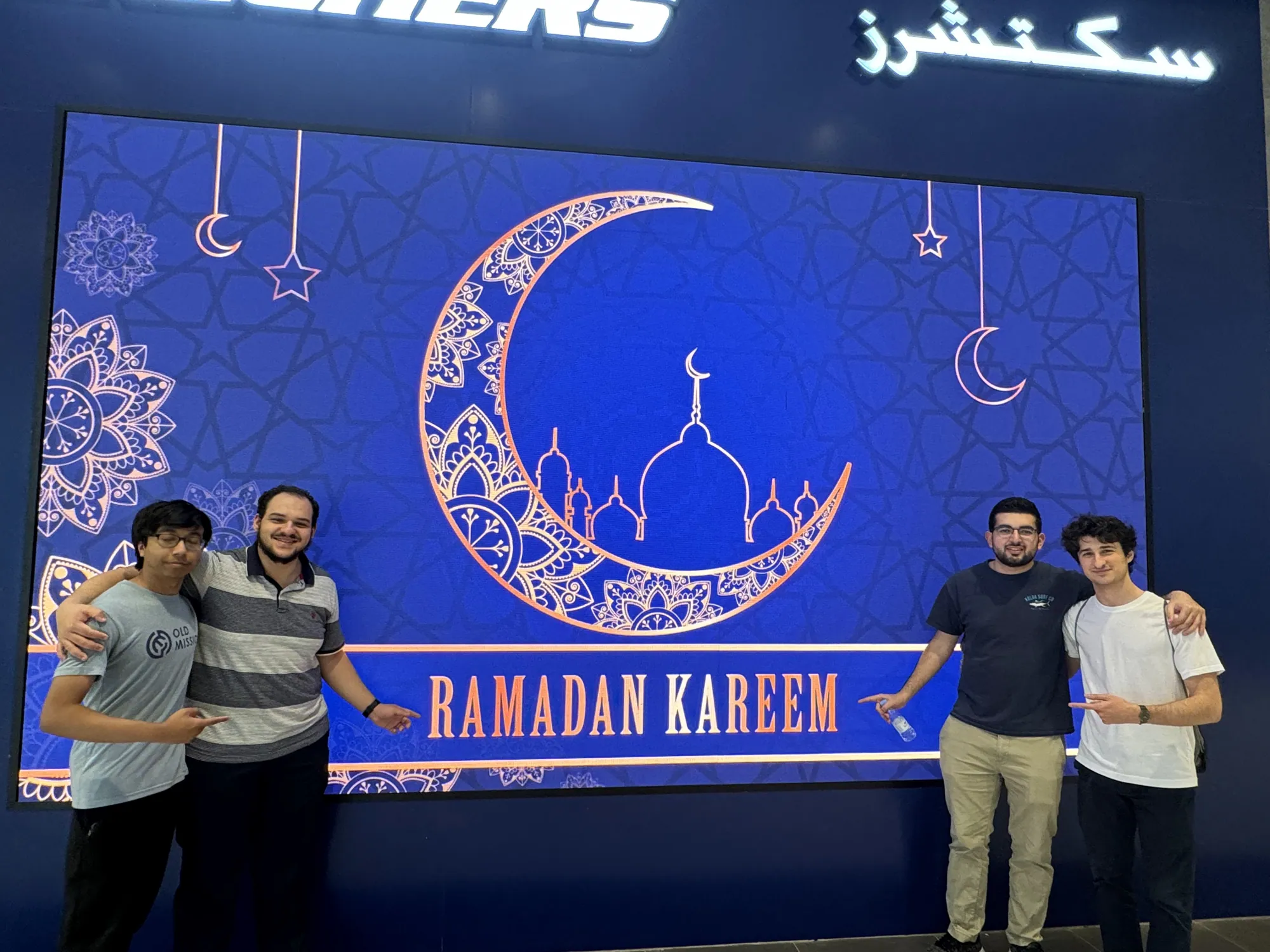
Fellows gather beside a Ramadan display during the pilot journey.
The record
What happened in the pilot
- A student-led Umrah journey took place in March 2024, organised by students at Yale.
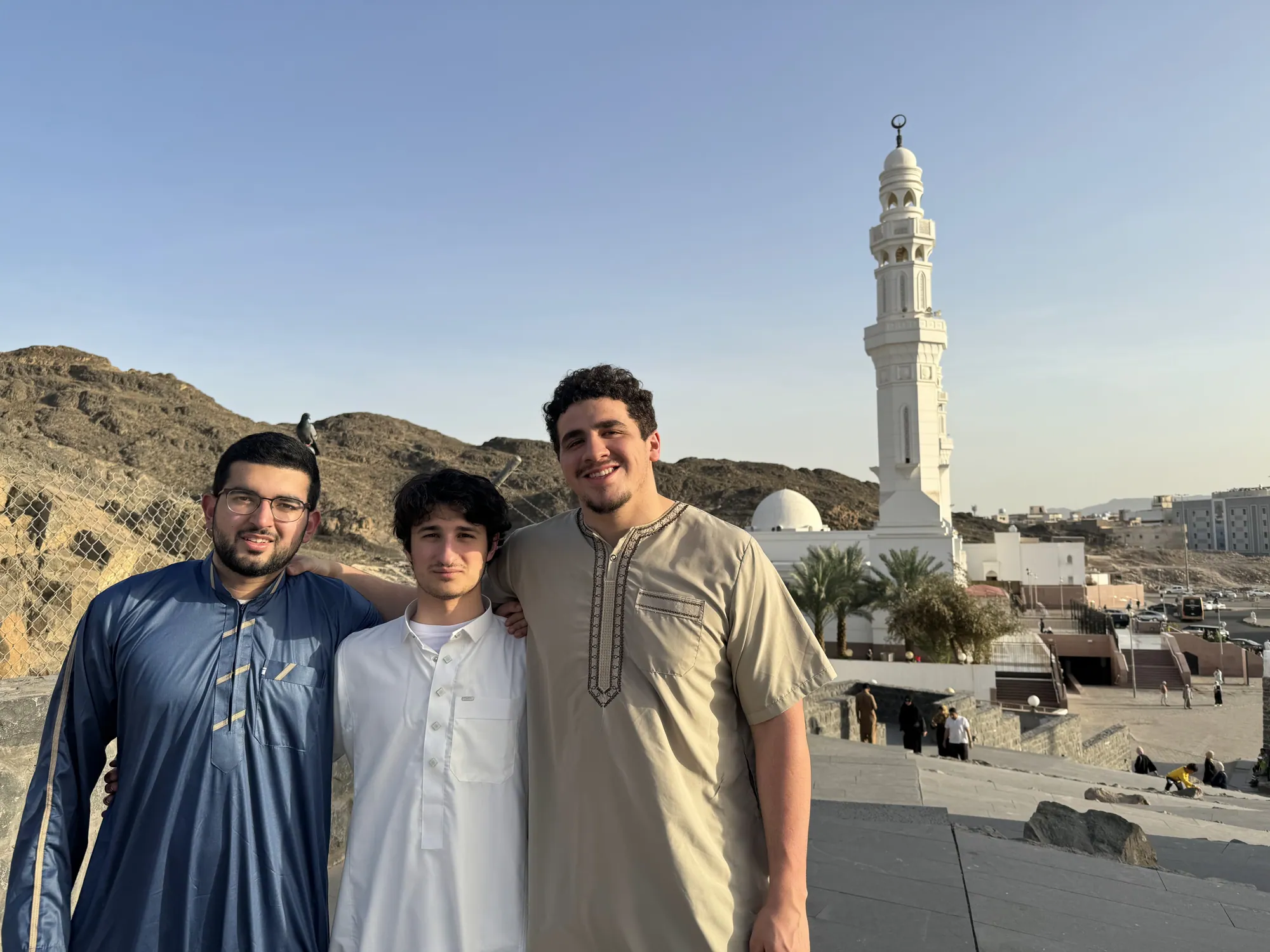
- Approximately thirty Muslim students travelled together for ten days across Jeddah, Madinah, and Makkah.
- The journey included pre-departure preparation, a fiqh of Umrah class, halaqas, communal worship, shared meals, visits to religious and historical sites, and group reflection.
- Many participants performed Umrah for the first time; some travelled internationally for the first time.
- A substantial share of the journey's costs was covered by outside supporters, demonstrating that externally funded access is feasible.
Figures are kept approximate where the underlying records are inconsistent. Nothing is stated more precisely than it can be verified.
Lessons
What the team learned
The pilot showed that sacred travel, community, and intentional learning belong together, and that the difference between a meaningful trip and a formative fellowship lies in preparation, structure, reflection, and what happens after the return.
Evaluation
What the fellowship intends to measure
Areas of formation
- Spiritual reflection and relationship with Islam
- Global understanding and understanding of the Muslim world
- Leadership confidence
- Service orientation
- Cohort belonging and cross-campus relationships
- Community contribution
- Continued engagement and mentorship
- Long-term influence
Methods
- Pre-programme survey
- Post-programme survey
- Guided reflections
- Interviews
- Mentor observations
- Six-month follow-up
- One-year follow-up
- Alumni engagement tracking
These are intended approaches, not completed systems.